And The Problem Is...Syringe Litter?


So much resentment toward people who use drugs comes down to public space. Even people with generally compassionate views on drug use, including some who have addictions themselves, can become outright angry at signs of substance use in public places. Some of this sentiment is simple disdain for unsightly poverty, and applies to anyone taking up public space for lack of another place to go. But some of it, I believe, is genuine confusion about how to be safe and what constitutes a safety threat.
The term "safety" can mean different things to different people, even simultaneously. For example, we know people use drugs in public places for their own safety: they calculate they are less likely to die by overdose if bystanders are present. But for the bystanders, watching a stranger consume drugs may feel unsafe, and they do not necessarily accept their implied role in the scenario. Most would not actually tell a drug user, "I want you out of my sight, and if you die by overdose, that's not my problem." This isn't necessarily how they feel about it, either: supporting overdose prevention sites, for example, without personally feeling prepared to intervene in overdose, is a coherent position.

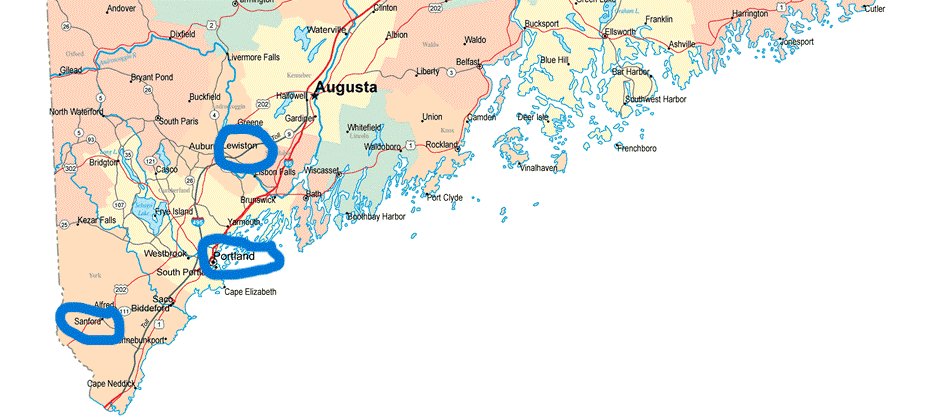
In Maine, the "safety" debate around public drug use is currently focused on used syringes littering streets, parks and playgrounds. Sanford has suspended its syringe services for a year, Lewiston has restricted its syringe exchange, and Portland mayor Mark Dion (👎) is trying again to do the same here after his first attempt failed last year. The reason given for each of these rollbacks? Syringe litter.
Obviously, syringes should not be left around. Animals may step on them, kids may pick them up, and nobody likes biohazardous trash. But here's what else I think is driving these policy changes:
- Objectively reasonable concerns as a trojan horse. People with widely varying opinions about drug use and drug users can all agree on not wanting syringe litter in their community. The identified problem, then, is waste disposal! Not that people have access to new syringes, and not what they're using syringes for. Why is the solution always to restrict or end syringe services? I note that Sanford, having suspended its own program, now lacks any plan for syringe waste collection.
- The same old "addicts should face consequences" attitude. People advocating these restrictions typically deploy this rhetoric as an aside, while mostly focusing on syringe litter. Their real motivations, however, may rank the other way around. And I think anyone talking about necessary "consequences" or "accountability" for injecting drugs should have to spell out what exactly they think that should look like. Maine now has a rising HIV case count– is this what they had in mind?
- The essential addict archetype. The essential addict is irresponsible and unconcerned with other people's needs. Used syringes left out in public, regardless of the reasons that each one came to be where it is, reinforce this perception. And again, the problem with addiction essentialism is not that it is necessarily wrong; it is incomplete and often leads nowhere in practical terms (nowhere with human rights, at least).
 Rosalie Genova
In this example, it seems perfectly fair that everyone who shares a space should clean up after themselves. But it's not happening! And it is never productive to fixate on what other people should theoretically do.
- Gridlock between harm reductionists and city authorities. If this were considered a straightforward waste disposal problem, lots of solutions would be on the table, including more public locations for sharps disposal, giving people their own pocket sharps containers, and syringe buyback programs. Buyback programs pay people for bringing in used syringes for safe disposal, and Portland's syringe buyback has been successful beyond dispute. The linked article describes the program running out of its daily allocated money by mid-afternoon, however, having to turn people away along with all the syringe litter they had collected.
Why aren't stakeholders collaborating more on the issue of syringe litter? For one thing, waste disposal is not the most inspiring cause. It seems everyone wants someone else to deal with it. I believe syringe exchanges could cultivate a lot of goodwill by being more proactive about disposal options. (Here's an example from the Indiana Recovery Alliance.) But harm reductionists often gravely mistrust community authorities– with good reason– and have inadequate funding and personnel. City governments, for their part, also have resource constraints. They may see syringe cleanup as an extra maintenance job they never agreed to take on.
It seems silly that Portland's buyback program won't pay, at ten cents per syringe, for as many people who are willing to bring in as many used syringes as they can find. But Dion thinks the city should be spending $0 on the issue (and really, you know, those people need to take some accountability). So what should be a question of trash cleanup drifts, on the political tide, to a question of reducing or cutting off syringe services. We can blame any of the parties involved here. But the only ones winning are the ones who feel people should have to suffer and die for injecting drugs.
How is your community dealing with syringe disposal? Please comment with any experience or ideas to share.
Local announcements:
- As anticipated, Maine is seeing a surge of ICE activity as of this week, disgustingly called "Operation Catch of the Day." Agents have tried to gain entry to people's homes by saying they're there to "help" with state social services, which Maine DHHS just confirmed is never legitimate. Report ICE or CBP activity in your area, with as much detail as possible, at (207) 544-9989. Warn your people not to circulate any unverified information. Consider donating to Project Relief Maine and/or the Maine Solidarity Fund. Have time to help with our response? See Portland's Bayside Neighborhood Association action page (you don't have to be in Portland) and follow No ICE For ME on Instagram.
- On a more positive note, the fantastic Chris Holloway LCSW is offering a therapeutic role-playing game! I have never gotten into RPGs but know they are can be a major source of support and connection. MaineCare and commercial insurance is accepted, and participants must be in Maine. More information here.