Mother's Day Edition: "The Molecules Are Outstripping Our Categories"+ Honoring Marlene McNeill

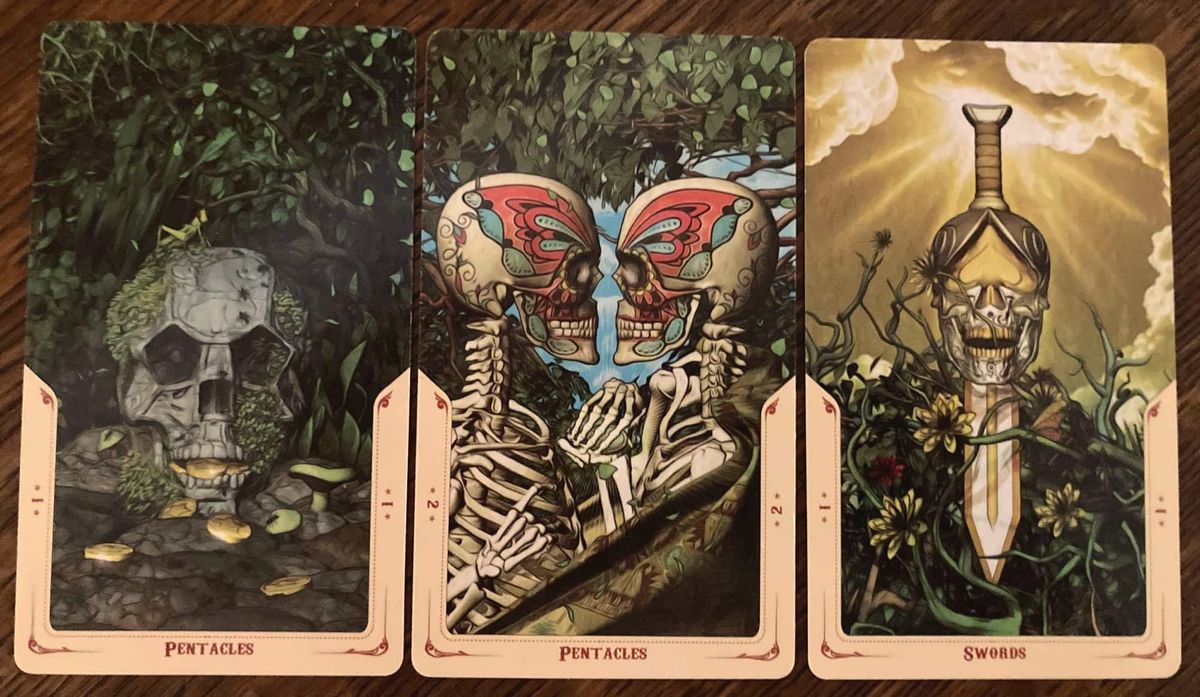
My mom is a veteran physician assistant in internal medicine. She has worked with many patients with addictions, introduced me to tarot when I was a teen, and has been here with mom dedication from the very first post! So when she texted me a topic suggestion last week, given where we are on the calendar, I bumped it to the front of the queue.
The topic is treatment options for specific substances of abuse. My mom wrote: "The molecules are outstripping our categories of diagnosis and treatment," which is absolutely right. Addiction treatment has long been structured around alcohol and opioid dependence, but we have so many patients seeking help for other kinds of drug use– and it seems to work even less well for them. Meanwhile new drugs, or variations on old drugs, are always showing up in a market with no safety guardrails. In a phenomenon called the iron law of prohibition, illicit substances become more concentrated (and thus more potent) in response to prohibition enforcement because all business incentives point to storing and moving the smallest volumes possible while still selling those small volumes at a high price.

The Drug Policy Alliance offers up-to-date fact sheets about major drugs and drug types in the illicit supply, including treatment options for what they call use disorders. My short, utilitarian answer is to check those out. My long, more critical answer is that people with addictions, and their providers, should look more to the relationship between person and drug, rather than what the drug is, to determine the right intervention.
I say this because I've seen the standardized, flow-chart model for substance use treatment referrals lead a lot of people to purported solutions that didn't work. Here are some examples:
- Cocaine and amphetamines: Referred to psychosocial treatment only because withdrawal is considered no big deal, then not being able to stop using or benefit from this treatment.
- Cannabis: Possibly same as above, while trying to participate in treatment groups with peers who don't take your needs seriously because "it's just weed."
- Alcohol: Prescribed a short benzodiazepine taper for safe withdrawal, but wanting to stay on benzodiazepines indefinitely as a maintenance medication. (As of the 1970s, prescribers frequently accommodated this, but it's rarely an option today– so people use illicit benzos or simply continue drinking.)
- Opioids: Switching to a prescribed maintenance medication, but not being comfortable with long-term dependence on any drug. The meds are often more difficult to get off than your original drug of choice.
 Rosalie Genova
In my ideal world, treatment recommendations would be shaped not by drug type but by questions like:
- What relationship do you want with the drugs you currently use? With drugs in general– including prescription drugs?
- What kind of care would be most helpful to you to achieve that relationship?
- What risks are acceptable for you as you attempt change? What risks are you not willing to take?
- What long-term result do you want from treatment?
An excellent source for breaking down assumptions based on drug type is Undoing Drugs by Maia Szalavitz. Szalavitz demonstrates how drug categorizations based on everything but the molecules and their effects– like social control and racism– created policies that have nothing to do with health or safety. My favorite example: In the 17th century Ottoman Empire, cannabis and opium use were permitted, but coffee was illegal! Why? Coffee houses were seen as gathering places for people plotting revolution. We are still dealing with this level of arbitrariness on drugs in society, now complicated by prescribing rules and the randomness of what maintenance medications do and don't (so far) exist. To whatever extent possible, treatment recommendations should cut through that noise.
Happy Mother's Day!
I will not necessarily do a Father's Day post– but not for lack of celebration. My dad, a psychiatrist who also saw all kinds of people, became an ancestor in 2008. Everything I write about mental health and being a therapist speaks to questions he raised in me.
In Honor of Marlene McNeill
The Maine mental health community mourns the death of program manager Marlene McNeill. McNeill was stabbed to death on May 4th by a resident of Shalom House, the group home where she worked in Portland. Did you know that health care and social assistance jobs have by far the greatest incidence of workplace violence injury in the private sector, including homicide? I have several colleagues who have been assaulted on the job, and I consider it blind luck that I have not.
Some patients' rights advocates act like we're imagining the threat of violence. I don't know how much more evidence they need that this is a real problem. When we call attention to our dangerous working conditions, the goal is not to criminalize or further pathologize the people we work with. The goal is safety in service settings.
You can contribute to the GoFundMe for McNeill's family here.