Review of "Crooked Smile: What It Took to Escape a Decade of Homelessness, Addiction, & Crime"

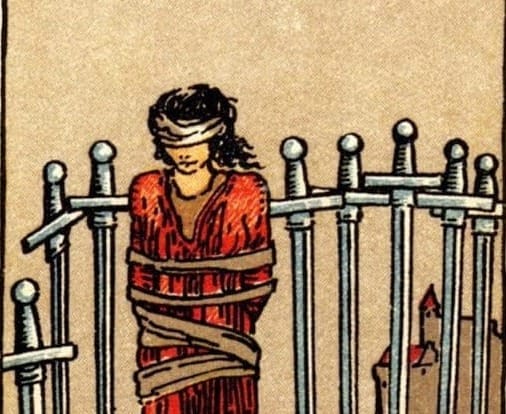
Crooked Smile: What It Took to Escape a Decade of Homelessness, Addiction, & Crime by Jared Klickstein, Bombardier 2024
"After nearly two years of getting rejected by every publisher, I realized...No one wants to publish another addiction memoir by a nobody...so I completely re-wrote the manuscript and turned it into a public policy book based on my actual experience with homelessness and addiction...and finally landed a deal."
-- Jared Klickstein, 2024
Crooked Smile is for the most part a memoir- funny, insightful and well-written -of a young white man's polydrug addiction and related experiences with street life and incarceration. The quotation above, from an interview about his writing, is an important qualifier. While "another addiction memoir by a nobody" would have been a perfectly valid contribution to our collective learning, this book's policy prescriptions were clearly added on in a rush and demonstrate almost no research. The result is a very lopsided work: rich wisdom interspersed with hot takes.
One of my cardinal rules in both substance use treatment and advocacy is that I do not debate lived experience. Klickstein's lived experience led him to his present convictions, so that connection too is off-limits for me: if he says he needed to lose his freedom to make positive change, I do not question that. Many, many people in recovery feel this way, and they're not all white men. Getting sober in prison is a thing, and people who did it have become some of the most energetic figures in the recovery and harm reduction movements.
The problem is that Klickstein, now over 5 years sober, assumes that what worked for him will work for everyone. Specifically, Klickstein feels that forced abstinence and fear of more bodily harm (the title refers to chewing off his own lower lip while high) provided the necessary motivation for his recovery. He argues that harm reduction and decriminalization encourage addiction by protecting people from some of its worst "consequences" and that people should instead be "strongly incentivized" (or punished) into recovery.

This philosophy of coercion and punishment is part of what I call addiction essentialism. Far from being uninformed, addiction essentialism can be strongest in people with lived experience and in seasoned treatment providers like me– that is, in people who have intensive exposure to the issue. Klickstein's philosophy is that of a true believer in abstinence-based treatment, which I once was as well. True believers see forced abstinence as a way to restore people's autonomy in the long run ("freedom from addiction") by taking it away in the interim. While I no longer support this approach, I maintain that it can come from good intentions. And I have a lot more hope that true believers can learn and change than I have for forced treatment's more cynical proponents, because true believers actually care what happens to patients:
 Rosalie Genova
I agree with the author that...
- Voluntary treatment should be accessible on demand. At several points in the narrative, Klickstein is interested in detox or treatment but cannot go due to cost. In a society that was serious about helping people with addictions, this would never happen. But it is quite common in the US today– while at the same time we lock people up for drug offenses and force people into treatment who don't want it. Klickstein seems to think we should have both universally accessible voluntary treatment and incarceration with forced treatment, and this part I don't understand. When so many people do not want treatment, how can we ever know in advance which ones will later say "thanks for forcing me, I needed that"? Especially if it doesn't happen the first time? And what about all the people who die before having such a revelation?
- Profit-making and quality care are incompatible goals. Klickstein recounts several treatment courses and identifies the basically universal business model I call extractive disposal. Treatment facilities aim to extract as much value as possible from enrolled patients, not to provide the most effective care. And these facilities take no interest in how patients fare after discharge because long-term outcomes have no impact on treatment organizations and are not even tracked.
- Medication is a false panacea. Klickstein states that his providers overprescribed and relied too strongly on biomedical approaches. He also shares that like many of my patients, he used opioid maintenance medication (in this case, Subutex) strictly as an affordable holdover while also using recreationally. This demonstrates we are wrong to assume such medications necessarily facilitate an exit, or even a sustained break, from street drug use. Finally, Klickstein recalls that withdrawing from Subutex was much more difficult than heroin withdrawal and asks "If the cure is worse than the illness, what exactly does it fix?" For more on the complexities of medication for substance use disorders, see:
 Rosalie Genova
...and now for the hot takes:
I'm summarizing because the book's statements on policy are vague and diffuse.
- If I can do it, as a straight white cis man, then anyone can! Klickstein acknowledges his privilege, but inconsistently. Granted, privilege itself can be inconsistent– he certainly faced disadvantages, especially having grown up with two addicted parents. But he does not adequately take into account supports that many others lack, including family wealth, access to higher education, friends who provided him housing, and several protracted medical rehabilitations including reconstructive surgery. It is also well established at the demographic level that white people with addictions receive the most empathetic, least punitive treatment– clinically, legally, and socially.
- Harm reduction is the prevailing norm, but maybe addicts should just quit using drugs! This is one of the things I find most annoying about conservative discourse: it takes the oldest, most entrenched thinking of civilization and tries to present it as new and edgy. In this case, the utterly ancient attitude is that deviant people need to change, and if they won't do so voluntarily, the community's role is to force them. Undesirable behavior must be deterred by punishment.
All punitive mechanisms, and nearly all addiction treatment, have always operated on this logic and continue to do so today. Not only have we tried this approach; we have tried very little else! If it hasn't worked for a few centuries, why would it work now?
The insurgent new idea in US policy (late 20th century) is in fact harm reduction, by which I mean honoring people's autonomy and prioritizing their health and safety unconditionally. Yes, we have implementation challenges galore. Simply calling something "harm reduction" does not make it so. And treatment with a goal of abstinence should always be available to those who want it. But the proposal to simply force everyone who is addicted into recovery, with all the evidence we have on what happens when we try, is totally unserious. That Klickstein has gained a small platform on conservative media as some kind of policy commentator, taking such an obtuse position, speaks to the current political backlash against harm reduction.
One resonant note
In an early passage, 12- year-old Klickstein convinces his mother to bring him and the dog to the park. With his mom being in active addiction, this was a special, hard-won treat.
"...But before we even got out of the car, she looked me dead in the eyes and said. 'Jared, I'm sorry, honey, but I forgot something at home. We can come right back after I grab it.'
"Knowing damn well that she didn't forget anything at all, but rather couldn't go twenty minutes without taking a hit, I cried. She cried too, and despite both of us indirectly acknowledging we both knew exactly what was really going on, she drove the car home and locked herself in the bedroom."
Klickstein's mother died by overdose not long after. His father later got sober and became a crucial support in Klickstein's recovery. Addiction work requires holding heartbreak and hope at the same time. Crooked Smile is most valuable and substantive in moments like this, most indulgent and superficial when it plays at policy.
📋I'm taking an anonymous, 5-question reader survey to better understand what my readers are looking for. I'd love to hear from you, subscriber or not!