Cuckoo Is A Verb
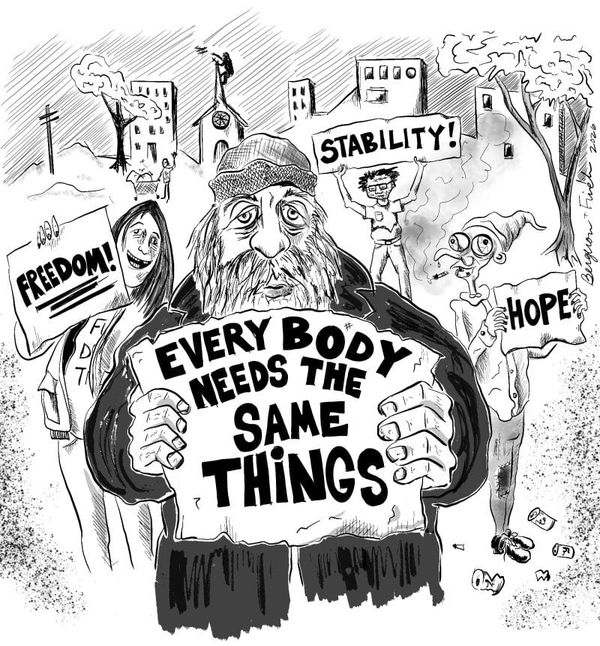
Cuckooing highlights the gap between what supports we might want for people with addictions, versus what is actually available.


Readers have requested that I write about lifestyle and community among drug users. Generally I do not feel qualified to do that, and defer to drug users themselves. But I recently learned about cuckooing and felt I could use this article from The Guardian as a frame of reference for what I do know. "A Tale of Two Trap Houses" follows one life in and out of active addiction, over time, as I have followed some of my long-term patients.
The term "cuckoo," as a verb, comes out of UK public safety operations. It is the act of taking over someone else's home for criminal purposes such as processing and distributing illegal drugs. The name comes from a parasitic practice of most types of cuckoo bird: laying eggs in the nests of other birds. Cuckooing schemes often target people who are isolated or otherwise vulnerable, and who live in a location convenient to the criminal enterprise. They begin with friendly overtures to this targeted resident, but then become more forcible as the resident loses control of their space. Typically the resident ends up driven out altogether.

Author Max Daly introduces us to his friend Duncan: artist, musician, educator, father, and longtime drug user. Duncan is cuckooed in London not once, but twice, both times allowing gangs to use his home for drug operations in exchange for product (for his personal use). In both cases he also assists the gangs, at his own risk, doing favors like a registering a car or opening bank accounts in his name. He also packs heroin and crack for street sale.
Duncan's first transition from home to trap house is a classic cuckoo: the outlaws become mocking and violent toward Duncan, and ultimately he flees to an emergency shelter to get away. The second instance, however, is more complicated. Duncan considers Tony, the drug dealer who begins working out of Duncan's home, a friend and supporter. Duncan feels valued for his knowledge of drugs and his help in preparing them. He reports that Tony helps him to eat better and even limit his drug use.
Duncan and Tony do deceive each other, each prioritizing their own interests in the supply, but it never comes close to the danger or chaos of Duncan's first cuckooing. Tony is now in prison, but Duncan still credits him for his own improved health and stability. The two friends remain in contact. Duncan says that he would not allow his home to be used for drug operations again, even by Tony, because now Duncan's "got other things to do." I note that Duncan did apparently attend addiction treatment at least once, but the effect of treatment, if any, does not even bear mentioning.
Are people being cuckooed in the US? It's hard to imagine not, though I have not found the term in use outside the UK. Risk factors have been identified as "extreme poverty" as well as medical and mental health difficulties– including substance use– and a lack of social contact, leaving someone eager for company even if it comes with conditions. Outlaws have even posed as social service workers to explain their presence in vulnerable people's homes. This highlights, again, the gap between what supports we might want for people with addictions, versus what is actually available.
Some final thoughts on how we see addiction through these two stories of cuckooing:
1) Levers of accountability support recovery– but are conditional. Duncan's employment and relationship status over time show an inverse relationship to his drug use. In other words, when he's working and has a partner, he's relatively controlled. When he's unemployed and single, addiction determines all of his choices. This is also the case for many patients I have known, and is demonstrated in addiction research: people with a strong stake in other areas of life are less susceptible to substance use problems, and better able to resolve such problems if they do arise.
The problem is that these levers of accountability, which help protect against addiction, can also be lost to addiction. In precarious circumstances, they may be some of the first stabilizing factors to go. And it is not always clear whether such losses are cause or consequence of a person's escalating drug use. In this sense, accountability is a privilege. Someone with no interpersonal expectations upon them is completely free but also dangerously unmoored.
2) Feeling useful is critical– but it has to be compatible with active, self-managed drug use. The essential addict, who only thinks about their own needs, typically wants accountability levers to remain in place whether or not they're actually being accountable. They want a forgiving partner or employer, and if they get dumped or fired for their substance use they might even blame their worsening addiction on that loss– rather than examining what they did to precipitate it.
Author Daly, along with several other friends of Duncan, are shocked when he agrees to a second cuckooing, and highly skeptical that Tony (the second perpetrator) has anything to offer other than drugs. But Duncan maintains that Tony makes him feel respected, that he is contributing, because with Tony he has a role. This role– packing drugs– can be done while simultaneously using, which is what Duncan does. But for him, it's a start, and it makes sense to me even as it goes against everything we associate with addiction recovery.
 Rosalie Genova
Working for a drug dealer while getting high all day may not look like accountability, but it's the only form Duncan was ready for at that time. By his own account, he has since returned to other non-drug activities, to the point where he no longer has time for cuckoos. This is why drug user activism is so important: it illustrates that active use and connections to the drug world do not disqualify anyone from serving a purpose. Accountability and connection to others are always healing if everyone can start exactly where they are.