We All Need The Same Things + Other News

Welcome, and welcome back, curers of addiction!
This edition is for summer updates and a sketch of what I'm doing when not posting here every week.
My Cover Story in The Bollard
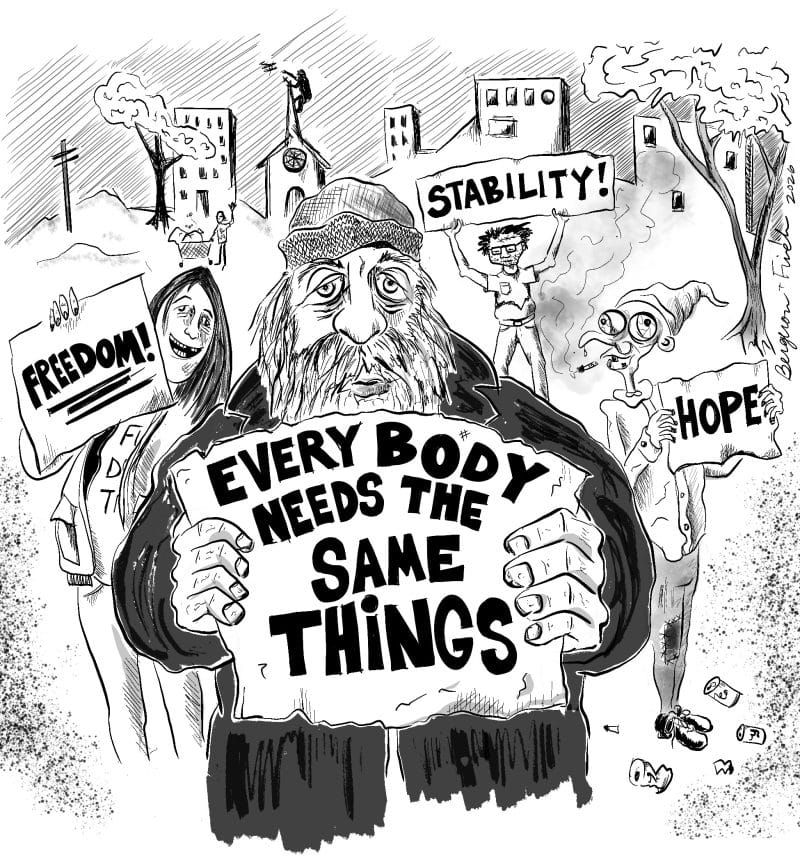
It's an honor to be in The Bollard, Portland's independent print magazine. The July issue just hit the 'net, so readers from away can now read my cover story: "We All Need The Same Things: Dispelling Myths and Seeing Real Solutions to Addiction."
People experiencing homelessness, addiction and mental illness are most visible this time of year, just as millions of visitors arrive, and sometimes all people know about those problems is that they don’t like what they see.
Minus the all-important tourist season, I could be writing about most cities in the US: people in crisis are living on the streets, and the comments section is bursting with solutions...that already have a decades-long record of failure.
Myths dispelled:
- Addiction is a disease requiring treatment
- "They don't want help"
- People who face consequences from substance use will develop the motivation to change
- People who don't want treatment should go to jail instead
I've been deeply touched by all the Bollard readers who contacted me about the article, sharing many different professional and personal connections to its message. Being true to my colleagues, my community, and Maine is a guiding principle for me, so this is enormously affirming. Also, editor Chris Busby tells me an unnamed VIP said "she's right about everything." Seriously, I try! This topic is worth getting right.
 Rosalie Genova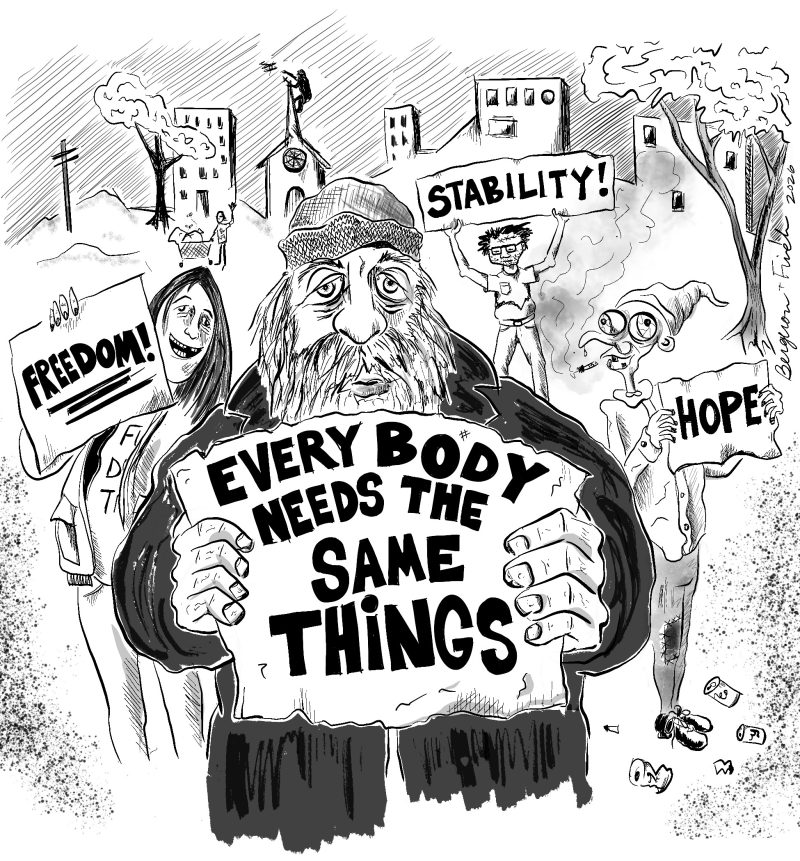
I have more work for The Bollard coming up, so Mainers, keep an eye on the newsstands! I will continue sharing online versions of my articles here once they're available, which is about 5 weeks after print publication.
CE Training on Moral Injury, Round 2
In June I taught my 6-hour CE course, on moral injury in mental health and substance use work, for a second round. The first time I taught it, in 2023, ended up kicking off the entire writing aspect of my work, including starting this newsletter, a peer-reviewed academic publication, and my book project (next in updates).
Attendee engagement and response was even more positive than last time, which felt like confirmation that I'm still on the right track. In 2023 I had some skeptics on the idea that we have moral obligations as clinicians– particularly obligations that might conflict with the goals of agencies, insurers or the state. In 2026 the audience was actually often ahead of me in the argument: already talking about C while I was showing slides on A and B to try to warm them up for C. I was humbled and moved by the stories shared and the trust placed in me and the group.
If you're a clinician interested in this topic, a recorded mini version of the 2023 course is still available here: 1.5 Ethics credits for $5.
Working On A Book
I'm writing a book with the working title Extract and Dispose: The Functions of Addiction Treatment. The idea was born when I left my last job for my current solo practice. I was painfully aware that I hadn't fixed anything in community treatment simply by leaving, and wanted to figure out what specifically is wrong with the system and what kind of change we need. It's taking a book-length project to answer intelligently, and then some: most of what I have published elsewhere, including in this newsletter, is not in the manuscript.
Right now I'm preparing a full revised draft to submit to publishers in the fall. I'm almost there, but it has meant putting more of my writing time toward the book than toward the newsletter. I expect to return to more regular posting once these submissions are out the door.
Hard Times in Maine
This is the part that is most difficult to write. Skip freely if you don't want to be brought down.
While the newsletter has been quiet, the good news is that I've been busy with all of the above. The bad news is that I'm a therapist in a horrific time who, it turns out, does not have infinite mental or emotional capacity. Trauma and loss are happening in my community, which means in my office, faster than I can even process, let alone write about. There's not much I can share about what I am hearing. Suffice it to say that at the end of some work days, or some work weeks, I have nothing left to give. I don't want to become another former mental health provider, or to start screening out everyone who has real problems! So I'm having to get more serious about unqualified rest.
ICE activity in Maine ramped back up this past spring, but the grassroots organizing networks we built last year and into the January "surge" are largely gone. People are increasingly afraid of prosecution, suspicious of each other, and arguing over strategy. In this context, despite ongoing determent and community defense efforts, ICE killed one of our neighbors a couple of days after my last post. Johan Guerrero, an immigrant from Colombia, was shot in his car in front of his 3-year-old daughter. This happened in Biddeford, pop. ~22,000, where many of my clients live or grew up.
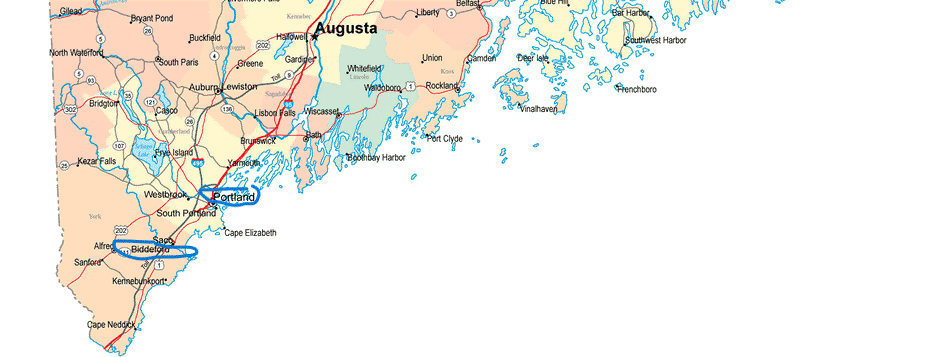
I didn't watch the video. I never watch the video. I can barely handle the beaming photos of Guerrero now circulating, nor photos of him enjoying Maine nature with his beautiful partner and daughter. I don't have a take. I can share this verified GoFundMe link. The killer was ICE agent David Brouillette, who held numerous previous jobs in Maine law enforcement and public safety.
A few years ago, I started identifying my activities as "...during a fascist takeover." The takeover is not complete, but it has definitely begun. There was no right or righteous era "before," nor do we know what comes "after," but this is a way to keep myself honest about the present. As a periodic check-in, I'd add these words mentally to whatever I was doing: "I'm driving to work during a fascist takeover." "I'm visiting family during a fascist takeover." "I'm browsing in a bookstore during a fascist takeover." Look, I warned that you might want to skip this section!
I do this because there's no point wondering what people were thinking, or how they kept going, in other places and times that we might compare to here and now. We know exactly what it's like, because we are in it. My add-on clause makes moments like this less surprising, though no less agonizing: I'm holding grief and terror, for both myself and my clients, because people around us are being arbitrarily disappeared and murdered during a fascist takeover.
I look forward to resuming regular posts here. In the meantime, thank you so much for reading and for your support. Like anyone else, I am doing my best to keep up my most important roles and advance a clear vision for change during a fascist takeover.